
Manassas, VA · Garage Door Service
Why Garage Doors on Older Manassas Homes Need Different Care
Most Manassas homes were built around 1982, before today's insulation codes, which matters for garage doors facing cold, severe winters here in Virginia.
- Repairs & new doors
- Springs & openers
- Serving 7 nearby communities
The Situation
Housing in this part of Virginia runs from 1940 up through 2015, but the median build year lands at 1982 - right in the middle of the stretch before insulation codes got serious about garage doors specifically. Across the 46 named areas in this service territory, from Sudley and Bull Run three miles out to Yorkshire and over to Manassas Park, the bulk of what's standing is still 1980s and 90s construction. That matters because a door built to spec in 1983 wasn't built to any insulation spec at all. It was a slab of steel, maybe with a thin vinyl backing, hung on hardware that was fine for the era and is now thirty-plus years old. With 88,472 owner-occupied houses across this area, that's not a handful of outliers - it's most of the garages on most of the streets. If your house falls in that build window, there's a decent chance your door is original or close to it, and it's not insulated the way a door sold today would be. The panel itself usually isn't the weak point. The gap around it, and the lack of a foam core behind the steel, is.
When to Call Someone
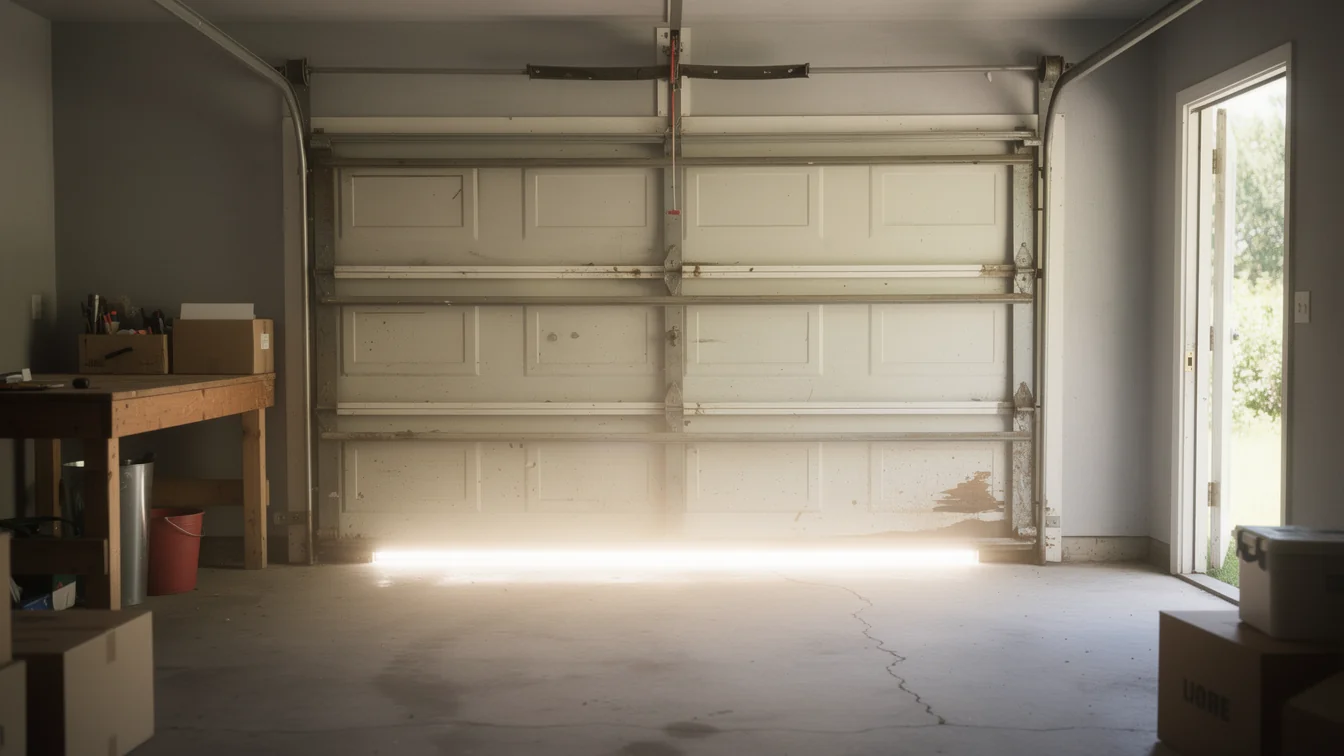
Call when the door feels heavier than it should when you lift it by hand with the opener disconnected - that's usually a spring that's lost tension, and on a door this age the spring was likely sized for a lighter, uninsulated panel to begin with. Call when you can see daylight at the bottom seal on a cold morning; on an older slab door that gap only gets worse as the track and rollers wear. Call if the door is original to a 1980s build and you're starting to see rust bubbling at the bottom panel seam - steel from that era doesn't have the galvanizing some newer stock does. One honest point: if the door is original and the track is bent or the hardware is non-standard for its size, we don't always recommend repair. Past a certain age, patching an uninsulated panel costs close to what a proper foam-core replacement runs, and you're still left with the same thin steel doing the same poor job against the cold. At a median household income of $132,614 in this area, most owners here are in a position to make that call based on the math, not just urgency.
Season by Season
This area sits in a cold, severe climate band, and an older door moves through that differently than a newer insulated one. Early winter is when a worn torsion spring on an uninsulated door tends to go - the steel contracts, the hardware is already under more strain from age, and the first hard cold snap finds the weak link. Mid-winter is seal season: the bottom weatherstrip on a decades-old door has usually hardened and cracked by now, and it's the difference between a garage that holds some heat and one that doesn't bother trying. Spring brings condensation problems on uninsulated steel - moisture beads on the inside of the panel when outside cold meets inside warmth, and over enough years that drips onto whatever's stored against the wall. Summer is the quiet season for door failures here, but it's also the best time to replace a panel before the next cold stretch, since lead times on parts for older, non-standard door sizes can run longer than people expect. If your door was built in that 1980s window, planning the replacement in summer beats discovering the spring failed in January.
What the Weather Here Does to It
Cold, severe conditions are hard on a door that was never built with insulation in mind. Steel contracts in the cold, and on an uninsulated single-layer panel that contraction happens fast and uneven, which is part of why older doors start to bow or rattle in their tracks after enough winters. The torsion spring takes more cyclical stress too - cold steel is stiffer, and a spring sized for a lighter decades-old panel is already working at closer to its limit before the weather gets involved. Humidity swings between seasons also drive the condensation issue on uninsulated steel, which over years can lead to rust starting from the inside of the panel rather than the outside, out of sight until it isn't. None of this means the door is unsafe to use day to day. It means the margin for error on an original 1980s or 90s door is thinner than on a door built to current standards, and in a cold, severe climate that margin gets tested every winter, not occasionally.
Frequently asked questions
How do I know if my garage door predates insulation codes
If your house was built anywhere near the early 1980s - which is the median build year across this area - the garage door is likely original or an early replacement, and either way it's probably an uninsulated single-layer steel panel. Look for a thin door with no visible foam backing when you open it from inside; that's the tell.
Is it worth insulating an old door instead of replacing it
Sometimes, but not always. Retrofitting foam board to an old steel panel helps a little with temperature but doesn't fix a worn spring, a cracked bottom seal, or hardware that's at the end of its life. If the door is from that 1980s build window and already showing wear, replacement with a foam-core door usually costs about the same as doing it piecemeal.
Why did my old door start rattling more this winter
Cold makes steel contract, and an older uninsulated panel contracts unevenly across its surface. Combined with decades of wear on the rollers and track, that's usually what you're hearing. It's worth having the track and hardware checked before assuming the panel itself is failing.
Related garage door services in Manassas
More garage door guides
Book garage door service in Manassas
Call now or request a quote - tell us what the door is doing and where you are.