
Manassas, VA · Garage Door Service
What Weather Seals and Drafts Really Mean for a Manassas Garage Door
Manassas homes built around 1982 often have seals worn stiff by cold-severe winters. See when a drafty garage door needs a new seal or a full repair.
- Repairs & new doors
- Springs & openers
- Serving 7 nearby communities
The Situation
Manassas homes span a wide range, built anywhere from 1940 to 2015, but the median build year sits around 1982. That means a large share of garage doors in this area are original to houses that went up in the late Reagan years - older steel doors paired with the rubber bottom seal and vinyl side stops that were standard equipment back then. Forty-plus years of expansion and contraction later, most of those seals have hardened, flattened, or pulled loose at the corners.
Across the 46 named communities in this service area, the pattern repeats: a strong concentration of 1980s and 90s construction means the same seal problem shows up house after house, not as a one-off defect but as a predictable wear point tied to age. If your door dates from that era and you feel air moving around the bottom corners or see daylight at the sides, you're not dealing with a bad install - you're dealing with a thirty-to-forty-year-old gasket doing what rubber does after that many winters.
When to Call Someone
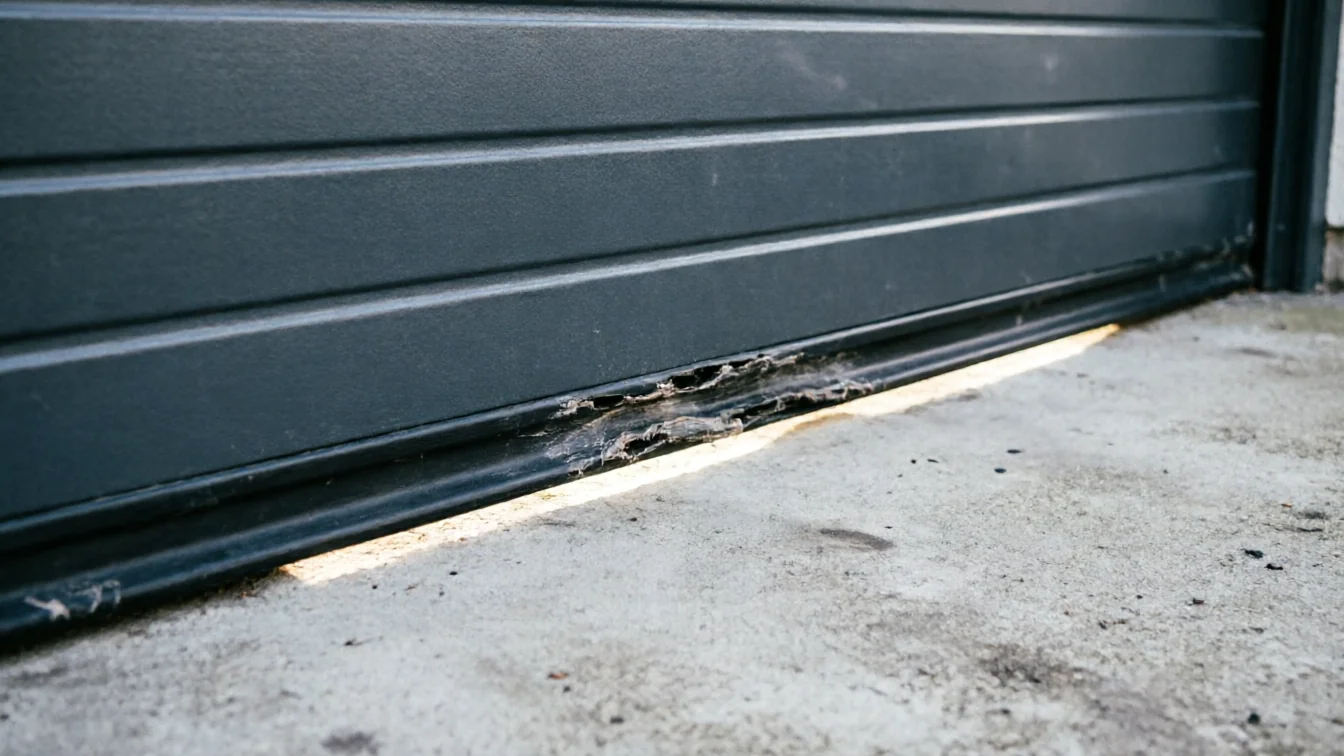
A worn bottom seal or a gap at the top header is often a part swap, not something that needs a truck. If you can see the seal is cracked, flattened on one side, or pulling out of its track, replacing it yourself with a new strip sized for the same era of door is usually cheaper and faster than waiting on an appointment.
Call when the draft isn't just the seal. If the door doesn't sit flush in the opening, if one corner shows daylight but the others don't, or if new weatherstripping keeps popping out of track within weeks of replacing it, that's usually a sign the door has racked out of square - a track, hinge, or panel issue, not a seal issue. We don't re-seal a door that's out of square; stretching new rubber over a misaligned frame just means you're back to the same gap in a few months. In that case the seal is a symptom, and the real fix is on the hardware or the panel, not the gasket.
Season by Season
Cold-severe winters are hard on rubber and vinyl both. Deep cold pulls the flexibility out of a seal fast - a strip that compresses fine in September can go stiff and crack by February, especially on doors from the 1980s stock common in this area, where the material has already spent decades cycling through freeze and thaw.
Spring is when you actually see the damage: freeze-thaw cycling through late winter tends to finish off a seal that was just barely holding on, and that's the point most owners notice air moving under the door for the first time. It's worth a look at the bottom seal and corner blocks as soon as the hard freezes let up, before the gap gets wider from repeated thaw cycles.
Summer brings less obvious trouble but trouble all the same - heat softens old vinyl and lets it sag out of its track, especially on a door that's already thin from age. By fall, the cycle repeats: the seal that sagged all summer goes brittle again the first time a cold front moves through. In a climate rated cold-severe, there isn't really a season where the seal gets a break.
What the Weather Here Does to It
A cold-severe rating isn't just a number - it means repeated hard freezes, not just one or two cold nights, and that repetition is what breaks seals down faster than a milder climate would. Each freeze shrinks the rubber slightly; each thaw lets it expand again. Do that enough winters in a row and the material loses its memory, stays contracted, and leaves a gap that wasn't there the year before.
That gap doesn't stay a comfort problem for long. Once weather seals and drafts start letting outside air through, they also let in moisture, which on an older steel door means rust starting at the bottom edge - the same edge where the seal already failed. On a house built around the median 1982 year common across this area, that steel has had three or four decades to start that process already, so a bad seal is often the thing that was holding back corrosion at the weak point, not just a draft.
The honest limit here: a new seal won't fix a bottom panel that's already rusted through. At that point you're looking at panel replacement, and we'll tell you that straight rather than sell you a seal that's cosmetic at best.
Frequently asked questions
Why does my garage door let in drafts even though it looks fine from the driveway?
Most of the draft problem is at the bottom seal and corner stops, which are easy to miss from a glance. In a cold-severe climate like this one, those parts harden and shrink over repeated winters, and on a door built around the 1982 median common to this area, that rubber has had decades to give out before anything else on the door shows visible damage.
Can I replace a drafty seal myself?
Often, yes. If the seal itself is cracked, flattened, or pulled loose but the door still sits flush and closes square, a new strip is usually a straightforward swap. If the gap keeps coming back within weeks of a new seal, the door itself may be out of square, which is a different repair.
When does a drafty door mean I need a new door instead of a new seal?
If the bottom edge of the panel has started to rust where the seal failed, a new seal won't fix that. Rust at the bottom panel usually means panel replacement, not weatherstripping, especially on older steel doors that have been losing that seal for a while.
Related garage door services in Manassas
More garage door guides
Book garage door service in Manassas
Call now or request a quote - tell us what the door is doing and where you are.