
Manassas, VA · Garage Door Service
Safety Sensors That Drift: A Manassas Problem With a Local Cause
Why safety sensor misalignment is common on Manassas garages built 1940-2015, and what the cold swings here do to the photo-eye brackets and wiring.
- Repairs & new doors
- Springs & openers
- Serving 7 nearby communities
The Situation
Most garages in this part of Virginia went up somewhere between 1940 and 2015, with a big cluster from the 1980s and 90s. That matters for safety sensors because the bracket design and mounting hardware changed a lot across those decades. On the older end of that range, sensors were often added later as a retrofit, screwed into trim or a stud that's shifted a little over the years. On the 80s and 90s builds, the brackets are usually original to the door but made of lighter stamped metal than what you'd get today.
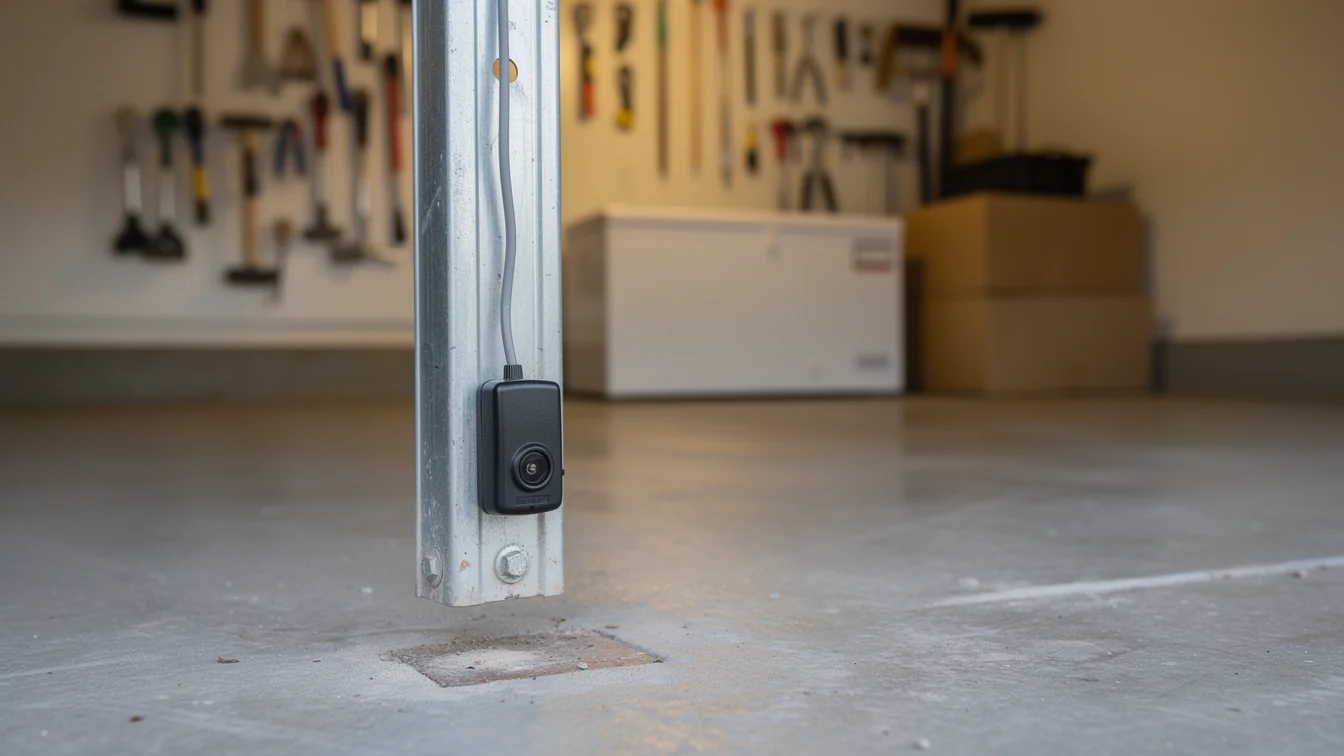
The sensors themselves - the two small eyes low on each track - have one job: see each other across the opening. When they're out of alignment by even a few degrees, the door won't close, or worse, it closes and reverses for no clear reason. Homeowners usually notice this as "the door won't shut" rather than "my sensor is tilted," because nothing about it looks broken. The LED is on. The wire is connected. It's just pointed slightly wrong.
On a slab or crawlspace foundation that's forty-plus years old, the concrete has settled unevenly in places, and a bracket mounted straight into that track years ago is no longer sitting at the angle it started at. That's the root of a lot of service calls that sound like opener problems but aren't.
When to Call Someone
If the sensor light is solid on both eyes and the door still won't close, that's almost always alignment, not a dead part, and it's worth five minutes with a level before you call anyone. Wipe the lenses first - dust and cobwebs across the eye read the same as misalignment to the opener's logic board.
Call if the bracket itself is bent, if the wire insulation is cracked or chewed through, or if the door reverses inconsistently even with a clear, aligned pair of sensors - that points to a wiring short or a failing logic board rather than a lens problem. Call also if you've got an older retrofit sensor pair on a house from the earlier end of that 1940-2015 range; those brackets were often not designed for the door currently hanging on the track, and realigning them is a temporary fix at best.
We don't recommend forcing a sensor pair back into alignment with shims or tape as a permanent answer. It'll hold for a while, then drift again, usually during the next freeze-thaw cycle. If a bracket's been bent more than once, replacing it costs less over a year than the repeat visits.
Season by Season
Alignment problems in this area aren't random through the year - they cluster. Late fall into winter is the worst stretch, because the severe cold swings here move concrete and wood framing enough to walk a sensor bracket out of true over a few weeks, not all at once. You'll often get a working door in October and a door that won't close by December without anyone having touched it.
Spring brings a second wave, mostly from humidity swings as wood trim that shrank over winter swells back out. Houses from the 1980s-90s stock with wood-framed track mounts feel this more than newer builds with metal studs.
Summer is usually the quiet season for sensors specifically - heat causes its own problems (we'll get to that), but alignment tends to hold once things stabilize warm. If you're going to do a seasonal check yourself, the highest-value time is early November, before the first hard freeze, and again in March.
What the Weather Here Does to It
This area sits in a severe cold climate band, and that's the direct cause of most sensor drift we see, not wear and tear on the sensor itself. Freeze-thaw cycling moves the slab or footing the bracket is anchored to by fractions of an inch, repeatedly, over a winter. A fraction of an inch at the bracket is a wide miss by the time it reaches the opposite eye eight or ten feet across the opening.
Cold also stiffens the wire insulation on older sensor runs, and stiff wire pulls brackets out of position when the door cycles and the wire doesn't flex the way it did when it was new. On a house built in the earlier part of that 1940-2015 window, that wire run may never have been replaced.
We can't stop a slab from moving with the season - that's a foundation issue, not a garage door one. What we can do is mount the bracket so it has a little play built in, instead of bolted bone-tight, so small seasonal shifts don't throw the alignment off every time.
Frequently asked questions
Why does my garage door sensor only act up in winter?
It's almost always the cold, not the part. Severe freeze-thaw cycling in this area moves the slab or footing the sensor bracket is anchored to by a small amount, repeatedly, over the season. That tiny shift at the bracket becomes a wide miss across an eight or ten foot opening, which the opener reads as an obstruction.
Can I realign a garage door sensor myself?
Yes, loosen the wing nut or screw at the bracket, nudge the sensor until the LED goes solid on both eyes, then tighten. Wipe the lenses first since dust reads the same as misalignment. If it drifts back within days, the bracket itself may be bent or the mount is loose in older framing.
My house is older - is my sensor setup different?
Possibly. Houses at the earlier end of the 1940-2015 range in this area often had sensors added as a retrofit rather than built in with the original door. Those brackets are sometimes screwed into trim or older stud framing that's shifted over the decades, which makes them more prone to repeat drift.
Related garage door services in Manassas
More garage door guides
Book garage door service in Manassas
Call now or request a quote - tell us what the door is doing and where you are.