
Manassas, VA · Garage Door Service
Why a Door Goes Off Track in a Manassas Garage
Manassas homes built between 1940 and 2015 carry track and roller setups that react to cold-weather swings. Here's why doors jump track and when to call it in.
- Repairs & new doors
- Springs & openers
- Serving 7 nearby communities
The Situation
Most of the houses we work on here went up between 1940 and 2015, with the median sitting around 1982 and a heavy concentration of stock from the 1980s and '90s spread across the named subdivisions in this area. That matters because track hardware from that era was mounted with lighter-gauge brackets than what gets installed today, and after three or four decades the lag screws holding those brackets to the jamb start to work loose. A door doesn't jump track because of one dramatic event most of the time. It happens because a roller has been running slightly bent, or a bracket has backed out a quarter inch, for months before anyone notices the door scraping on one side. On a lot of the 1980s-vintage doors we see, the original rollers are still in there, and steel rollers that old have usually developed flat spots that knock the door sideways every time it travels past them. The fix starts with knowing what's actually loose versus what's actually bent, because tightening a bracket on a bent track doesn't hold.
When to Call Someone
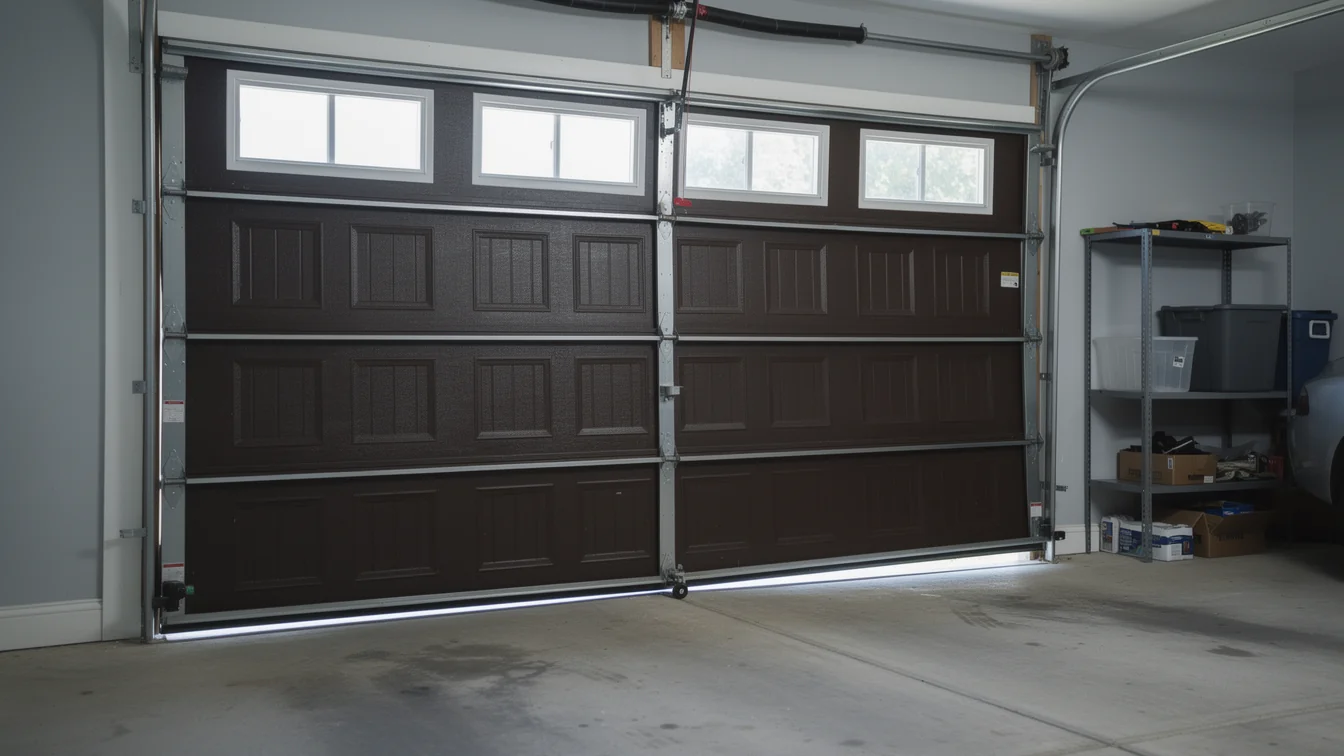
Call before the door comes fully off, not after. If you see daylight between the roller and the track on one side, or the door rattles hard at the same spot every time it opens, that's a track that's bowed or a bracket that's shifted - not something to force through with the opener. Running the opener against a door that's partway off track strips the opener gear or bends the track further, and both of those get more expensive than a bracket re-set. We don't recommend trying to push a door back onto its track by hand; torsion spring tension makes that genuinely dangerous, and it's one job we tell homeowners flat out to leave alone. If the door is original to a house built in the 1980s or earlier, there's a real chance the whole roller and track assembly is due for replacement rather than a patch - we'll tell you straight if that's the case instead of billing you twice.
Season by Season
Spring and fall are when loose brackets tend to announce themselves, because the ground and the slab move slightly with the temperature swings common to this area's cold climate band, and a track that was square in January can be a sixteenth of an inch off by May. Summer heat doesn't do much to the track itself, but it can reveal a bracket that was already marginal, since the door panel expands slightly and changes how it sits against the rollers. Winter is the season that does the real damage here, given the severe cold this area gets - steel contracts, grease in the roller bearings stiffens up, and a roller that was borderline is now dragging instead of rolling, which torques the track at the point of contact every single cycle. We see the bulk of off-track calls in the first hard cold snap of the season and again right as things thaw, which lines up with how the hardware itself is reacting to temperature rather than with any one brand or age of door.
What the Weather Here Does to It
This area sits in a severe cold climate band, and that's the detail that explains most of the off-track calls we run. Cold doesn't just stiffen the springs - it shrinks the steel track itself by a small but real amount, and if a bracket is already a little loose, that shrinkage is enough to pull a roller out of alignment on the first really cold morning. Houses built in the 1980s and '90s, which make up most of the stock we work on, often have track sections joined with fewer brackets per run than current code calls for, so there's less holding the alignment steady when the metal moves. We also see galvanized track on older installs start to pit slightly where moisture gets trapped at the bracket joints, and pitted track grips a roller unevenly instead of letting it glide. None of that is a defect in the original work - it's just forty years of seasonal cycling doing what cold steel does.
Frequently asked questions
Why did my garage door suddenly jump off the track?
Usually it's not sudden at all - a roller or bracket has been slightly out of alignment for a while, and a cold snap or a loose lag screw finally pushes it over the edge. On older Manassas-area homes from the 1980s stock, worn steel rollers are the most common cause we find.
Can I push the door back onto the track myself?
We don't recommend it. A garage door under torsion spring tension can move unexpectedly hard if you try to force it back into the track by hand, and that's a real injury risk. It's a short job for someone with the right clamps and bar - call it in.
Does cold weather really affect the track?
Yes. This area sits in a severe cold climate band, and steel track contracts slightly in hard cold. If a bracket is already loose, that small shrinkage is often enough to pull a roller out of alignment, which is why we see more off-track calls right after the first deep freeze.
Is it worth fixing an old track or should I replace it?
Depends on the age and condition. If the house dates to the 1980s or earlier and the rollers are original, patching one bracket often just delays the next failure. We'll look at the whole run and tell you honestly whether a repair or a full track swap makes more sense.
Related garage door services in Manassas
More garage door guides
Book garage door service in Manassas
Call now or request a quote - tell us what the door is doing and where you are.