
Manassas, VA · Garage Door Service
When a Spring Goes in Cold Weather Here in Manassas
Why torsion springs snap in cold weather on Manassas's 1980s-era garage doors, and what to do when yours goes in the middle of a hard freeze.
- Repairs & new doors
- Springs & openers
- Serving 7 nearby communities
The Situation
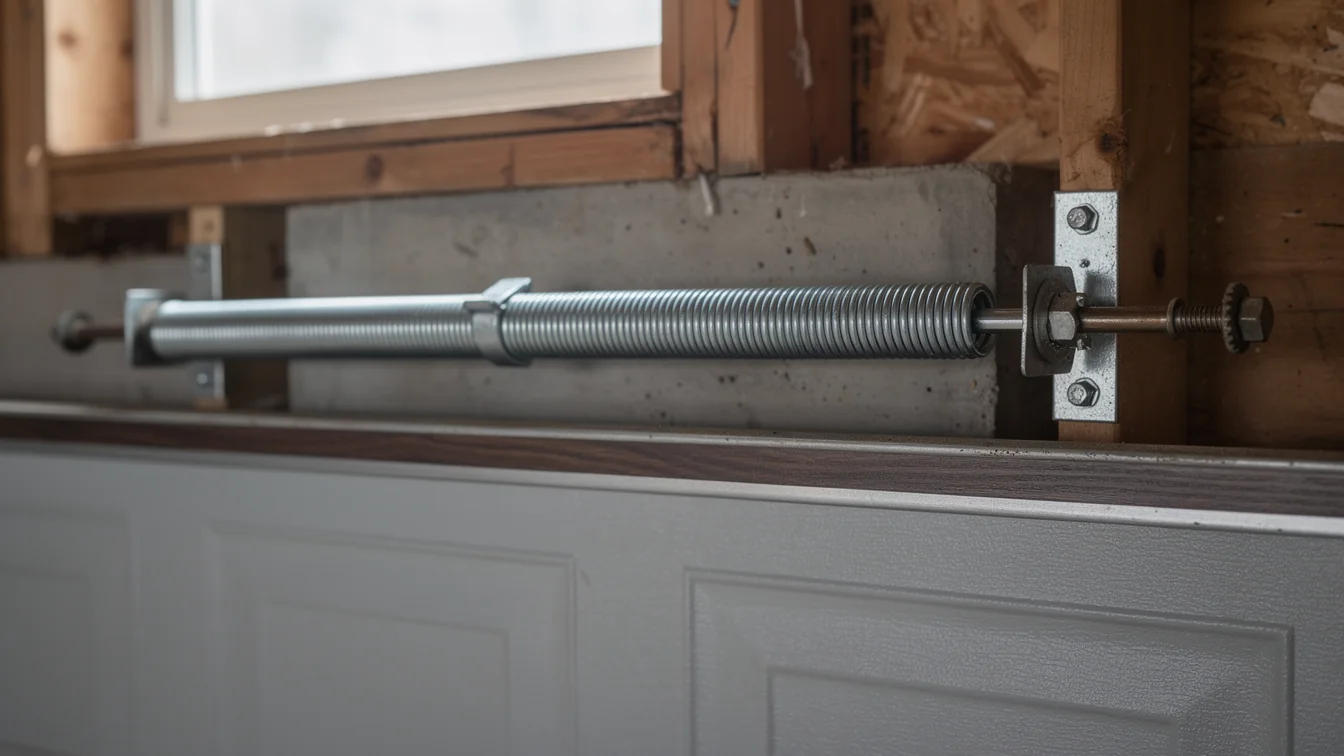
Most of the garage doors we get called out to in this area sit on houses built somewhere in that long stretch from 1940 to 2015, with the median landing around 1982. That means a lot of torsion springs out there are original or close to it, wound for steel that's now forty-plus years old and brittle in ways you can't see from the driveway. A spring doesn't care what day it is. It cares about repeated flex and metal fatigue, and cold weather is the thing that tips a tired spring from "still working" to "snapped." You'll usually hear it before you see it - a bang like a shelf collapsing, then the door won't budge or it drops fast and uneven when you pull the release. If that happens on a door that's been in service since the 80s or 90s, which describes a huge share of the housing stock across this service area, you're not dealing with bad luck. You're dealing with a part that was already near the end of its wind count and got pushed over by low temperatures tightening the steel.
When to Call Someone
If the spring is broken - door won't lift, or lifts crooked, or you hear that bang - don't try the opener again and don't try to lift the door yourself. A broken torsion spring on a double door is carrying real tension on the other side, and the cable or shaft can let go while you're standing under it. Call and leave the door down. If it's just stiff or slow in the cold but still moving, that's a different call - lubrication and balance, not an emergency. One honest limit here: if your spring is original to a house built in the early 80s, we're not going to tell you a single replacement spring is the fix. At that age the opener gears, cables, and rollers are usually just as worn, and patching one part on a system that old is money spent twice.
Season by Season
Spring and fall are when we see doors drift out of balance - temperature swings stretch and relax the metal, and a door that was fine in August starts dragging by October. Summer is light on spring failures but heavy on opener and sensor calls, since heat affects electronics more than steel. Winter is spring season, plain and simple. The region's housing stock, mostly dating to the 1980s and 90s, means a big share of torsion springs on local garages have been through thirty-plus winters of that cycle - contract in the cold, expand in the heat, contract again. Each cycle removes a little life from the coil. By the time a spring is old enough to have a house built around it from that era, it's often sitting at the tail end of its rated cycle count, and a cold snap is just the trigger that finally lets it go.
What the Weather Here Does to It
This area sits in a cold-climate band with real seasonal severity, not a mild one, and that matters for how garage door steel behaves. Torsion springs are rated for a cycle count assuming a working temperature range - when it drops hard, the steel contracts, loses a bit of flexibility, and the same torque that lifted the door fine in October can be the straw that snaps a coil in January. It's the same reason an old spring that survives ten mild winters can fail on the first truly cold week of an eleventh. Houses in this area built in the 1980s and 90s are now old enough that their original hardware is past the point where cold is a minor stress - it's the deciding one. If your door has gone stiff on cold mornings the last couple winters, that's the spring telling you it's losing tension before it breaks outright.
Frequently asked questions
Why did my spring break overnight when it's just cold out?
Steel contracts and stiffens in low temperatures, and a spring that's already fatigued from decades of cycling doesn't have the give left to handle that extra stress. A lot of garages in this area have torsion springs original to houses built in the 1980s or 90s, so by now the cold is often the final push on a part that was already near the end of its life.
Is it safe to open the door manually after a spring breaks in winter?
No. A broken torsion spring means the counterbalance on the door is gone or uneven, and the door can drop fast or the cable can whip loose under tension. Leave it down and call rather than pulling the emergency release yourself, especially on a double door.
Do older garage doors in this area need both springs replaced at once?
Usually yes, if the door is original to a house from the 1980s or 90s era common across this region. Springs installed as a pair wear down together, and if one has failed from age and cold, the other is close behind - replacing just one often means a second call within a year or two.
How cold does it need to get before a spring is at risk?
There's no single number - it's about accumulated fatigue meeting a hard freeze. This area sits in a severe cold-climate band with real winter swings, and springs that have handled thirty-plus of those cycles are the ones most likely to let go on the coldest stretch of the season.
Related garage door services in Manassas
More garage door guides
Book garage door service in Manassas
Call now or request a quote - tell us what the door is doing and where you are.